Demo wall · launch week · checked 2026-11-15
What people built with Claude Fable 5.2
Short answer
Claude Fable 5.2 demos and examples from launch week include games, 3D worlds, physics papers, browser tools, audio experiments, research reconstructions and a prototype operating system. This page curates 45 projects worth opening and links every one to the creator's original work or repository.
Demos at a glance
| Field | Value |
|---|---|
| Projects | 45 curated demos Selected from 165 live works tracked by the community index on 2026-11-15. |
| Categories | Games 17 · 3D worlds 22 · Science 9 · Systems 5 · Tools 10 · Visual 22 · Audio 2 · Research 2 Tags overlap; one project can sit in more than one category. |
| What is here | Browser games, 3D scenes, scientific visualisations, audio experiments, research reconstructions and tools Every card names the creator and links to the original. |
| Added this round | 15 games, worlds, tools, research pages and audio experiments The community index moved from 133 live works on 13 November to 165 on 2026-11-15. |
| Evidence rule | Creator claims are labelled; no private benchmark is implied A live link means the page opened for this review, not that the whole claim was reproduced. |
| Read | 2026-11-15 The original source remains the authority. |
How to read the wall: a live link means the demo opened on 2026-11-15. A repository link means the code or write-up is public. Numbers such as hours, tokens, cost or Elo are the creator's claims and are labelled as such; none of them is a benchmark we ran. The community index is a broader, CC0 list; this wall is the subset with enough evidence or novelty to open first.
- Live
games · visual · 2026-11-10
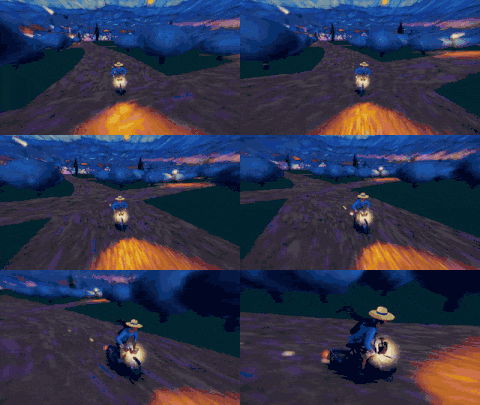
Starry Nightrider
A playable ride through Van Gogh's Starry Night, with the painting rebuilt as a navigable game world. It became the most-liked live work in the community index within days of launch.
Creator's figure 17.9k likes when the community index was checked on 2026-11-15 — a reception figure, not a performance benchmark.
- Live

games · visual · 2026-11-11
Oil Paint
A hand-painted game whose frame is built from brush strokes rather than textures. The source is public, so the rendering trick can be inspected instead of taken on faith.
Creator's figure Under an hour to make; about 1.5 million brush strokes per frame at 200 fps in a browser tab — the creator's figures.
- Live

games · 3d · 2026-11-10
CROSSTOWN
An early open-world New York build with streets, buildings and first-person movement. Only part of the city exists in this preview, which makes the boundary between demo and product unusually visible.
- Live
games · 2026-11-11
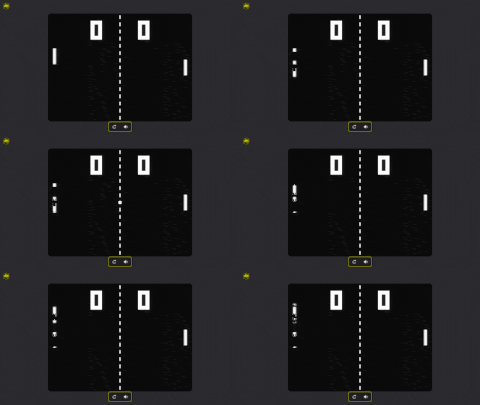
Tennis
Asked to go wild with a small game, the model returned something that looks like Pong until the player moves. The joke is in the interaction, which is why the live link matters more than a still frame.
- Live
games · visual · 2026-11-10
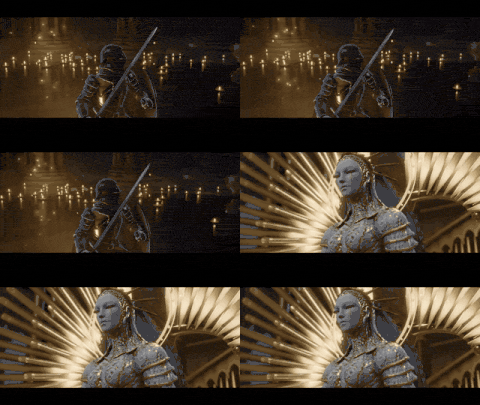
Evensong
A browser boss fight with a dark-fantasy setting. Combat is a harder test than a walkable scene: timing, collision, animation and feedback all have to work together.
- Live
games · visual · 2026-11-10
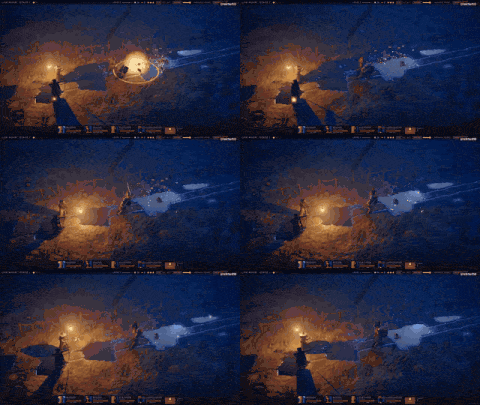
LANTERNFALL
An action game whose animations and models were generated for the project rather than assembled from an asset pack. The motion preview shows the combat and enemy-death effect in context.
- Live
games · 3d · 2026-11-09
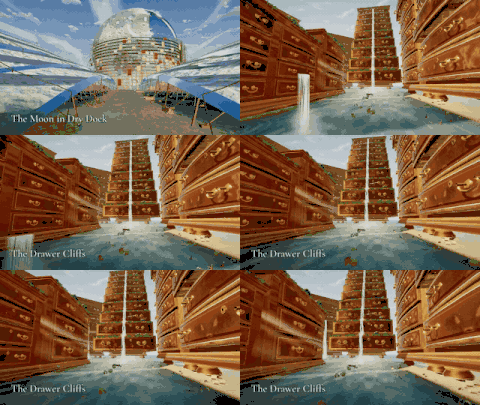
Portals: Endless Worlds
Portals connect more than 450 code-only worlds inspired by books, art and places. The essay and source are public, making this one of the more inspectable multi-agent experiments.
Creator's figure 25,000 agents generated the worlds — the creator's stated setup.
- Live
3d · visual · 2026-11-12
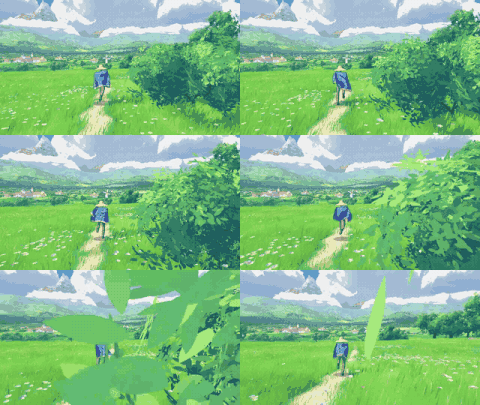
Painted Valley
A Ghibli-inspired valley you can walk through, with the painterly surface carried into movement rather than frozen on a hero image. The project is open source.
- Live
3d · science · 2026-11-10
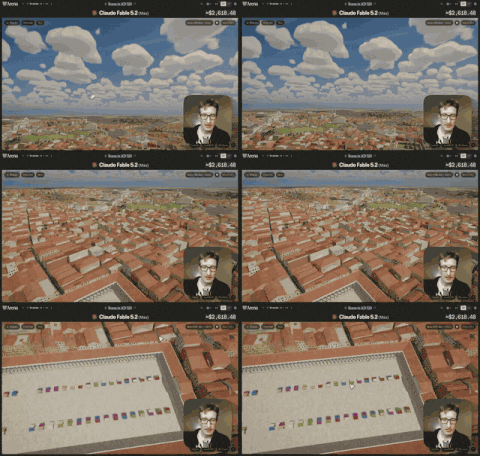
Rome, AD 320
A walkable reconstruction of Rome built from one prompt over an overnight run. It is also the clearest cost outlier in the public demo set: a large bill bought a large, inspectable scene.
Creator's figure One prompt, Max effort, overnight; the creator reports $2,618.
- Live
tools · 3d · 2026-11-10
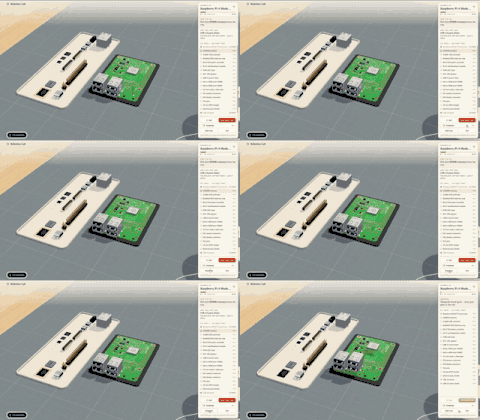
Robotics Lab
A browser lab with eight real boards in 3D: place chips, solder them in and wire circuits. It is a product-shaped use of the model's spatial and tool knowledge, not another game clone.
- Live
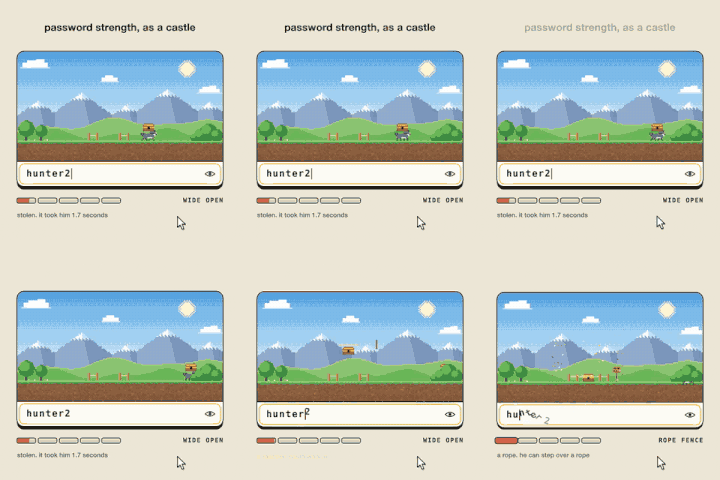
tools · visual · 2026-11-09
Keep
A password-strength meter rendered as a living pixel world. The interaction is ordinary security UI; the visible model is how a tiny product detail can justify a richer presentation.
- Live
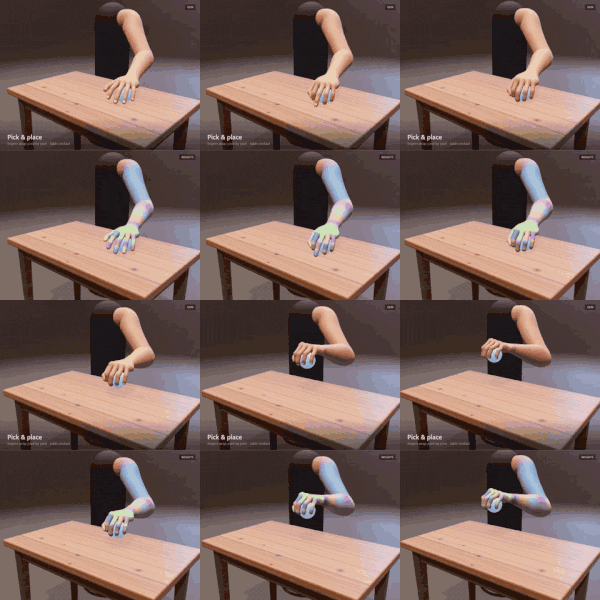
3d · systems · 2026-11-10
Procedural Arm Rig
One arm rather than one game: bones, weight-painted mesh, inverse kinematics and muscles that respond as the fist closes. A useful counterexample to the idea that the best demo has to be the biggest scene.
- Live

games · 3d · 2026-11-09
Saltline
A one-level first-person shooter in a rainy container port: cut three relays while drones and robot dogs hunt you. The whole game is one HTML file; models, sounds and textures are generated in code.
Creator's figure One prompt, about 8 hours, ~$550 at API prices — the creator's figures, not ours.
- Live
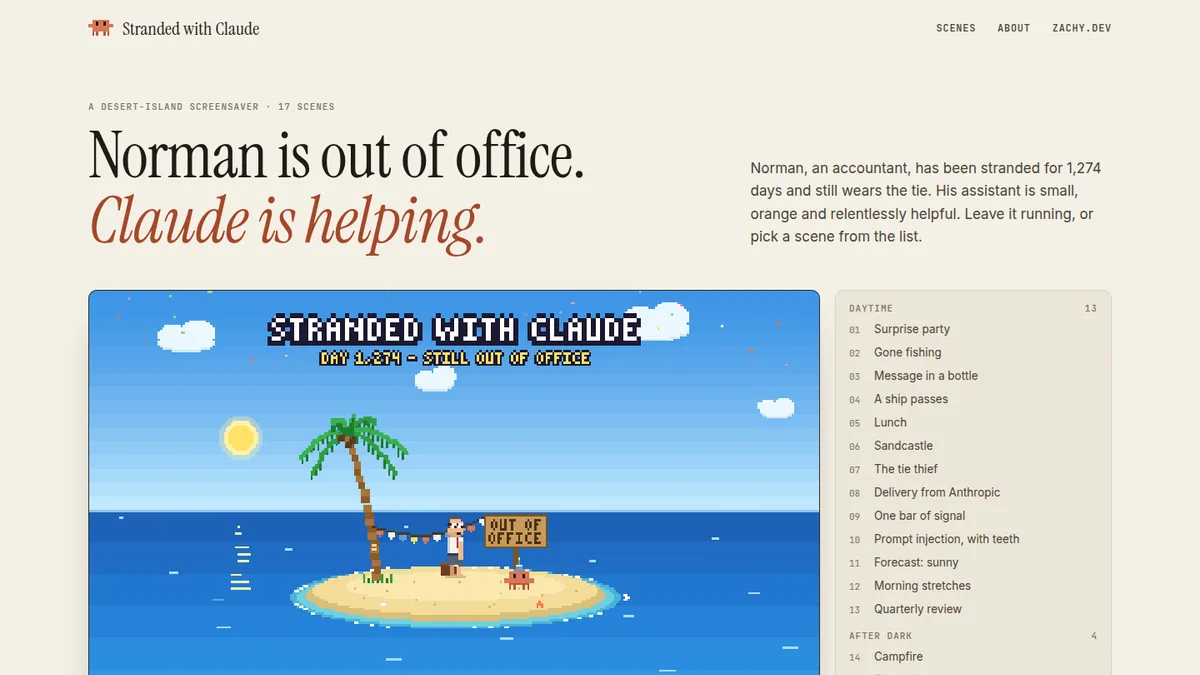
games · visual · 2026-11-10
Stranded with Claude
A desert-island screensaver with 17 animated scenes. Everything is drawn on a 320×180 canvas, one rectangle at a time: no sprites, no image files and no libraries.
Creator's figure Three prompts, 56 minutes from first prompt to build, 51 minutes of Claude working.
- Live
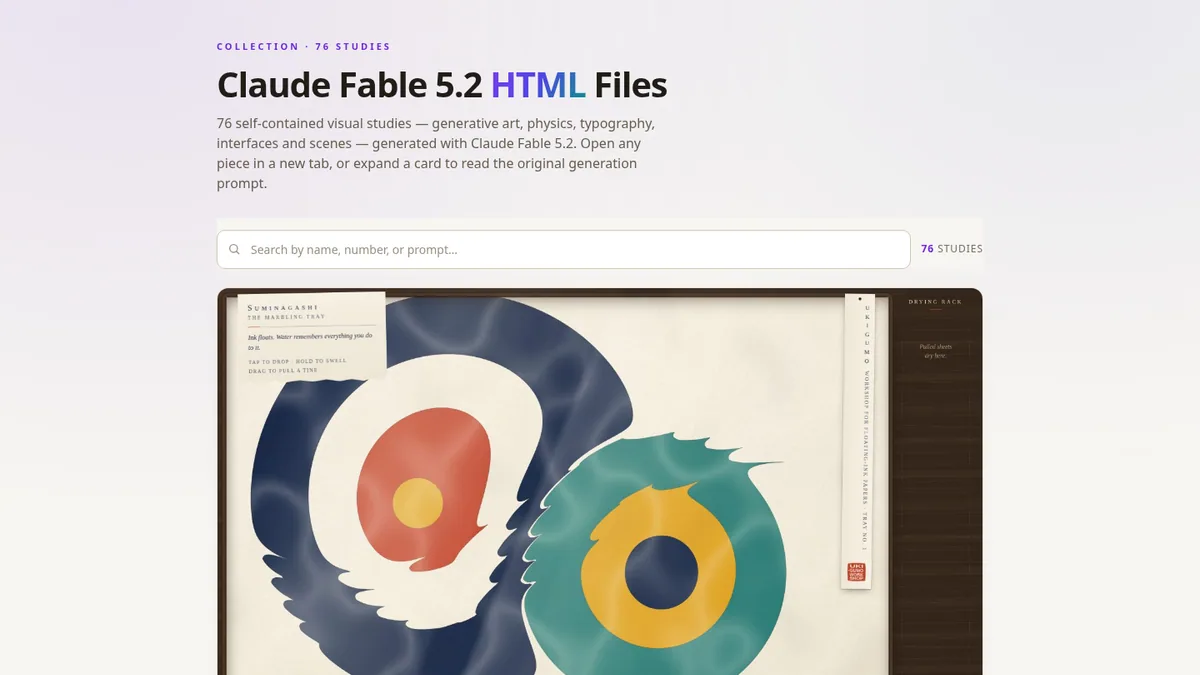
visual · tools · 2026-11-10
76 single-file HTML studies
A collection of 76 self-contained visual studies: generative art, physics, typography and interfaces. Each card opens the piece and shows the original generation prompt.
- Live
science · visual · 2026-11-10
Spectra
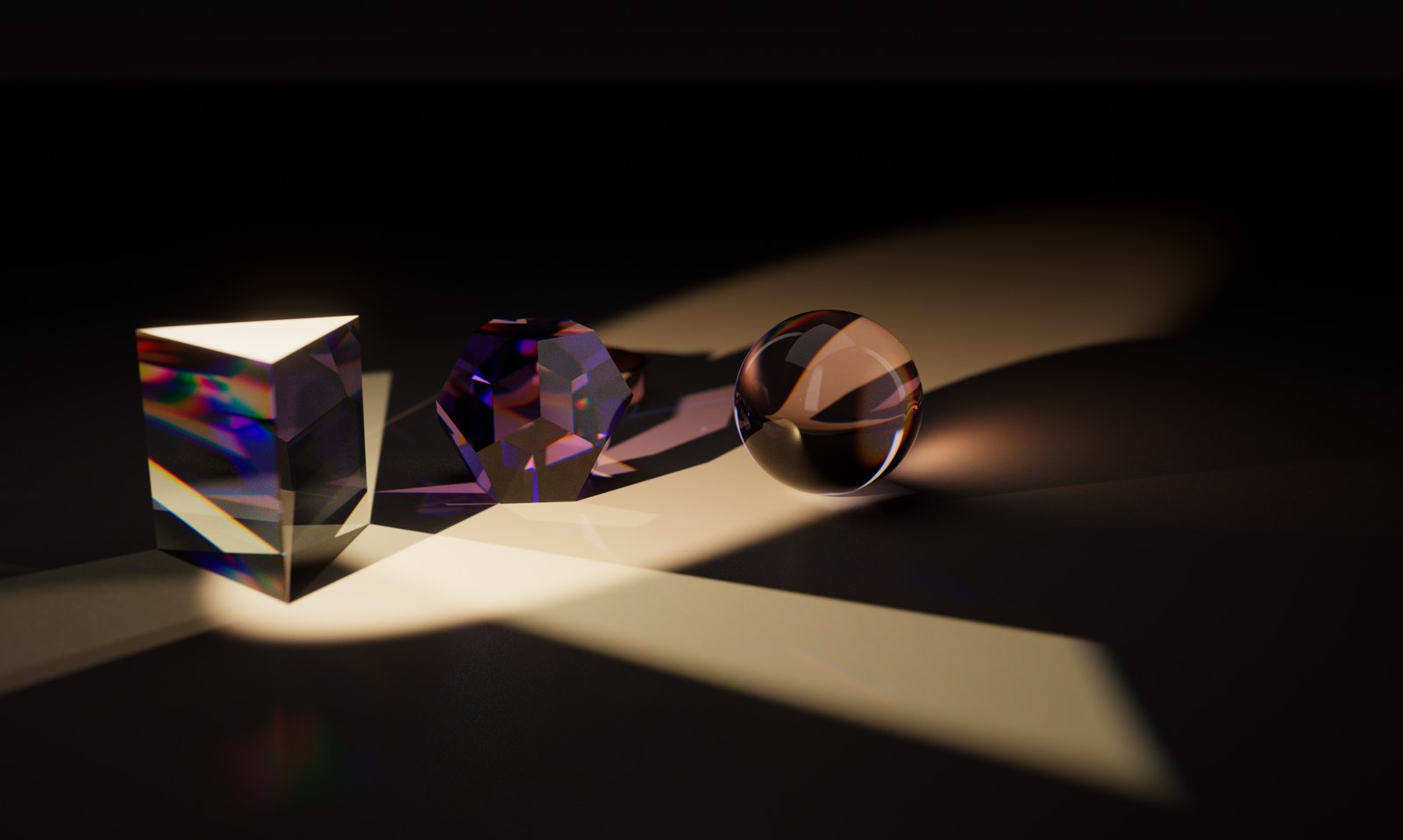
A real-time light-physics playground in a single HTML file. One mode is a spectral path tracer with dispersion, caustics and Fresnel glass; the other is a bench for rays moving through lenses, prisms and mirrors.
- Live
visual · tools · 2026-11-10
X-Ray Mirror
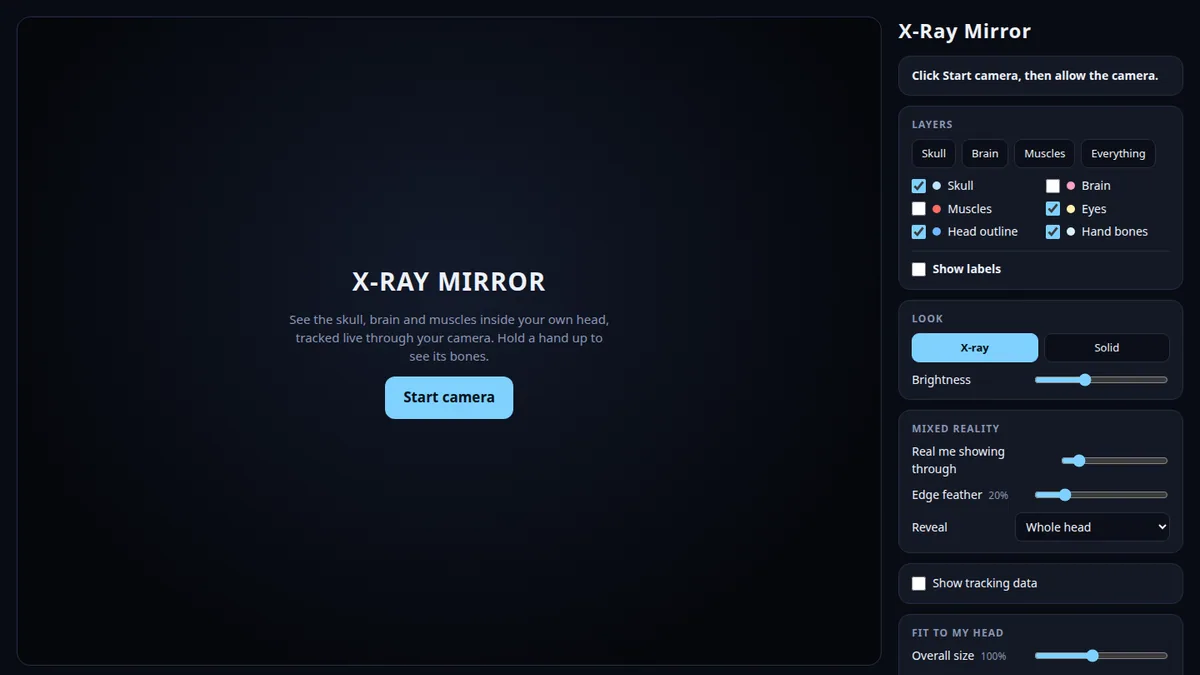
A webcam effect that overlays a skull, brain and muscles on a tracked head. The controls let you mix the camera feed and the model, change layers and fit the skeleton to your own proportions.
- Live
visual · 3d · 2026-11-10
Typewriter desks: 1897, 1927, 1962
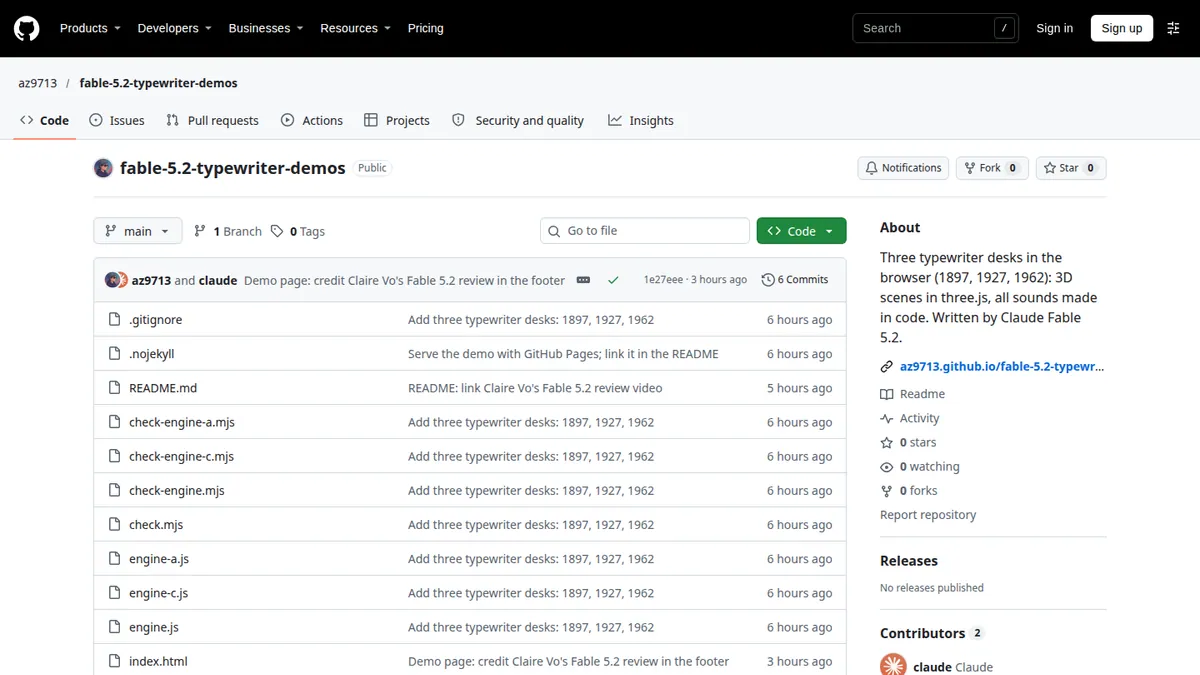
Three period writing desks built in three.js. You can type on a Remington, an IBM Selectric and their neighbours; every sound and every note of music is generated at run time, and the repository contains no audio or image files.
- Live
science · 3d · 2026-11-10
Earth: The Whole Story
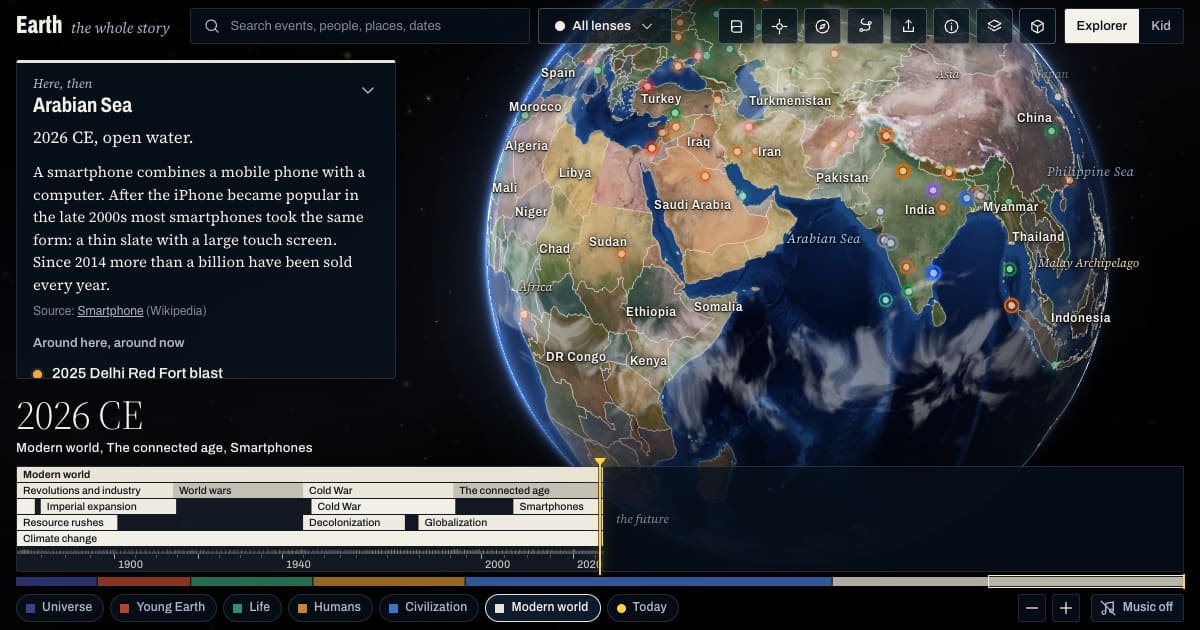
One interactive globe and one clock from the Big Bang to today, with moving continents, changing ice sheets, 67,721 dated events and 16 scroll-driven stories. The build ships as a static site with no server code or API key.
Creator's figure One prompt, unsupervised, finished in 11 hours — the creator's account.
- Repository
systems · 2026-11-10
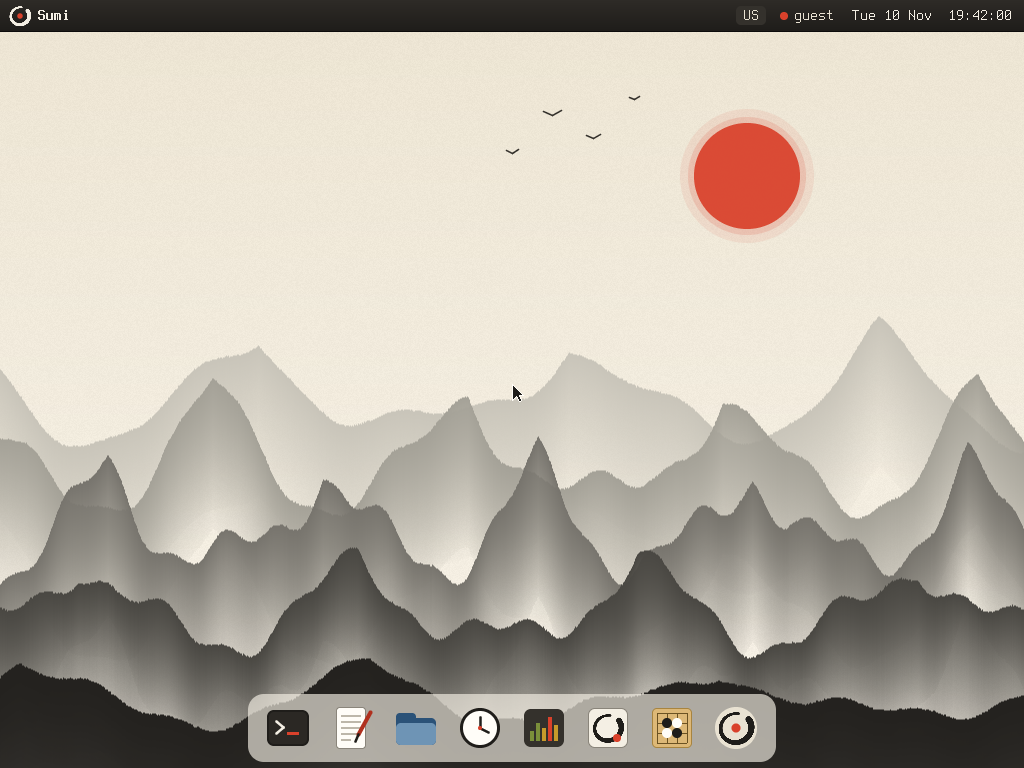
Sumi OS
A prototype x86 desktop OS built from an empty folder and one prompt. The repository publishes the kernel, drivers, file system, window system, nine applications, installer, prompt and test results exactly as the run left them.
Creator's figure About 9,400 lines of C and NASM in 96 minutes of model work, with no hand fixes to the code.
- Repository
games · systems · 2026-11-10
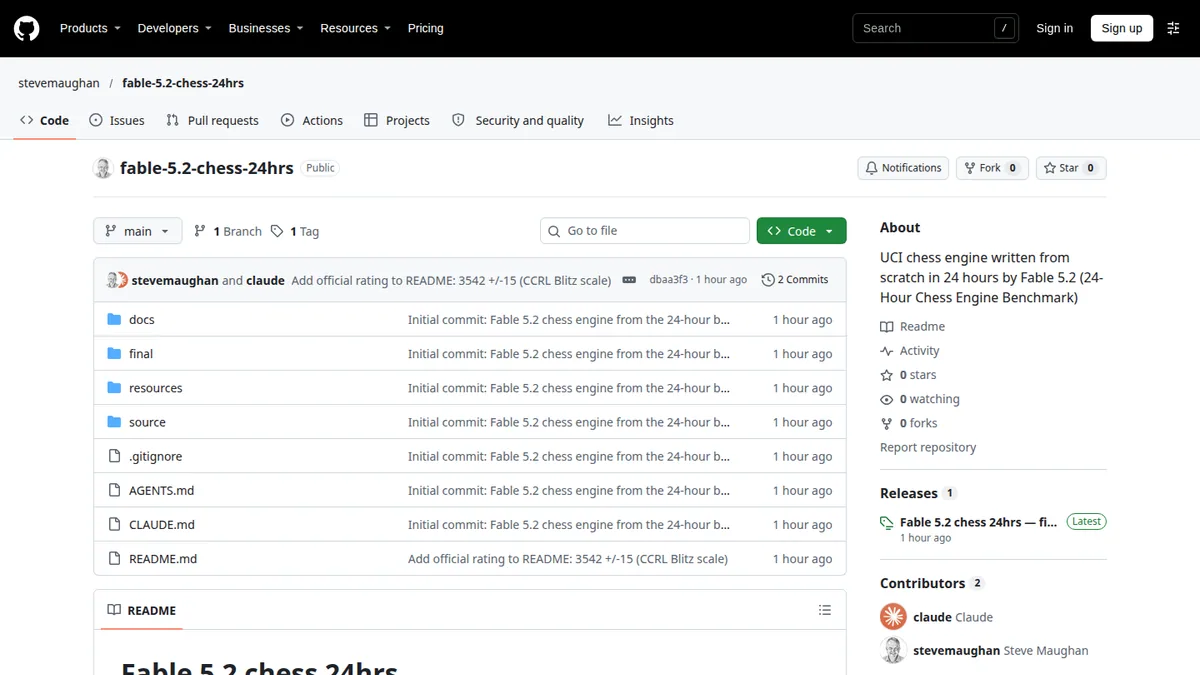
24-hour chess engine
A UCI chess engine written, trained, tuned and tested from scratch in one autonomous 24-hour session. The repository includes the hour-by-hour log, the build, the network trainer and the final executable.
Creator's figure A 3,542 ± 15 rating on the CCRL Blitz scale over 2,220 games — the author's reported result.
- Live
science · visual · 2026-11-10
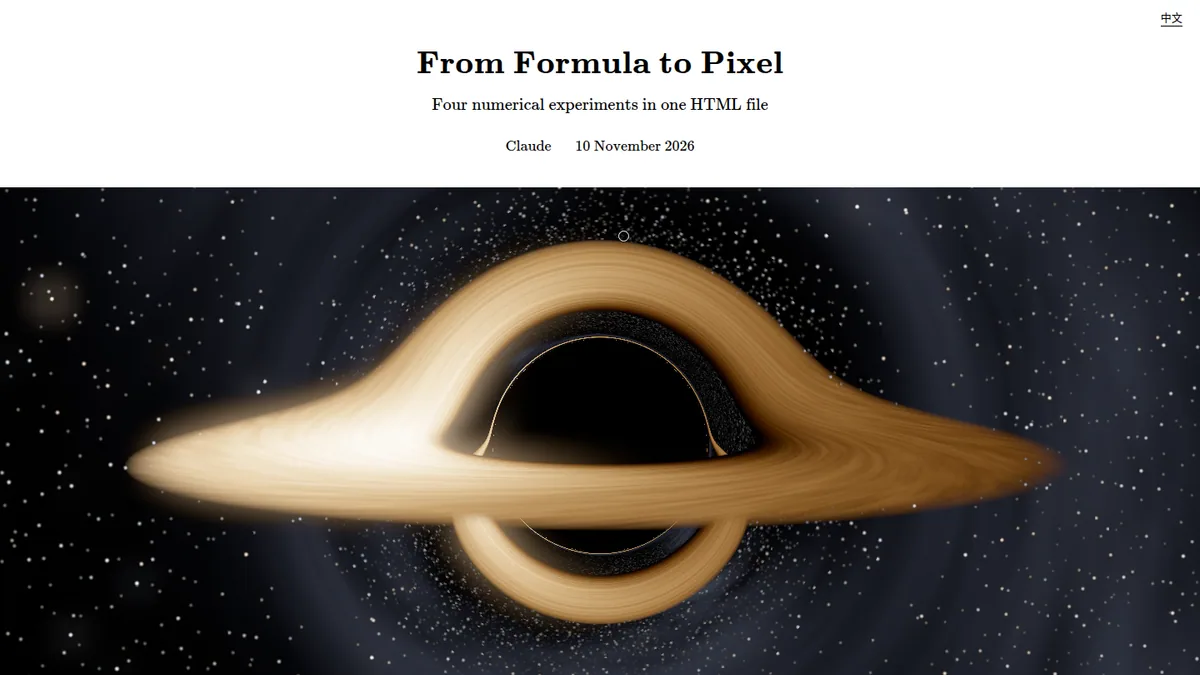
From Formula to Pixel
Four numerical experiments in one self-contained HTML paper: a black-hole ray tracer, the three-body problem, flow matching and a QR decoder. The algorithms are written out by hand and 24 assertions compare the running code with independent results.
Creator's figure One prompt, no follow-up message, single HTML file — the creator's account.
- Live
games · 3d · 2026-11-10
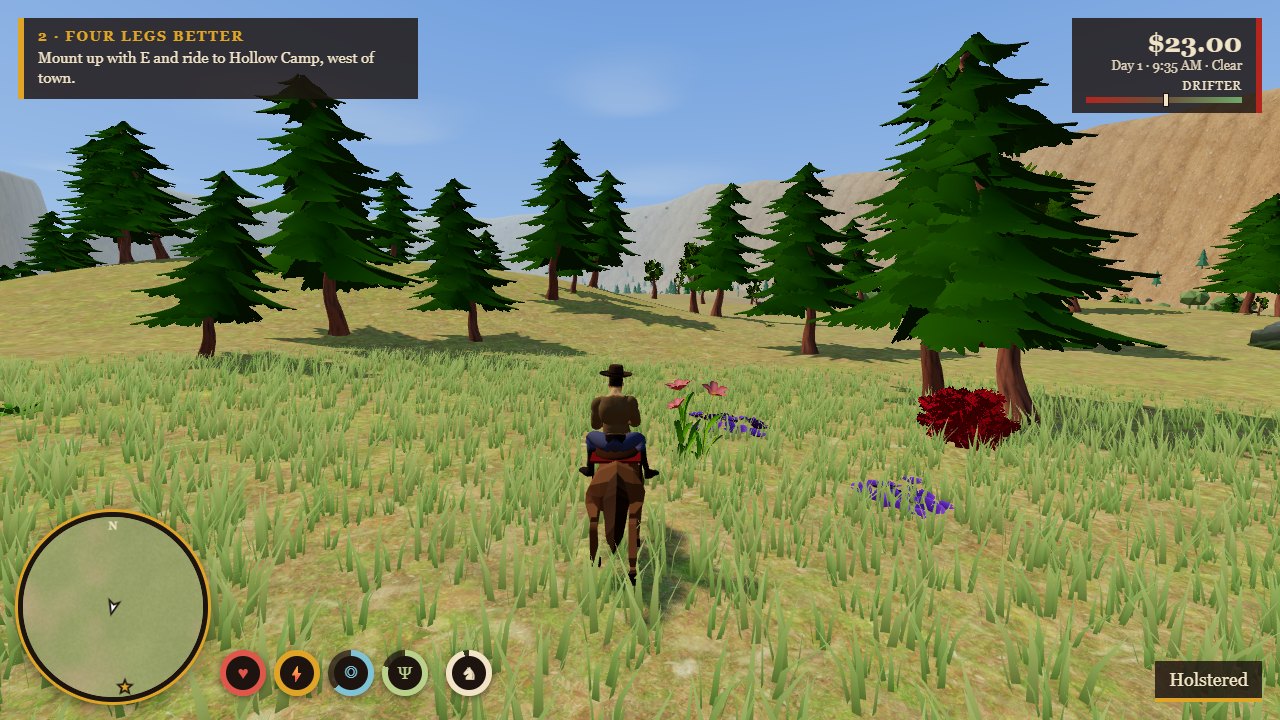
Dustfall
An open-world western built with three.js: a town, ranches, a rail depot, weather, a horse, gunplay and a six-chapter story. The author says the game, story and shaders were written by Fable 5.2 from chat prompts.
- Live
3d · visual · 2026-11-10
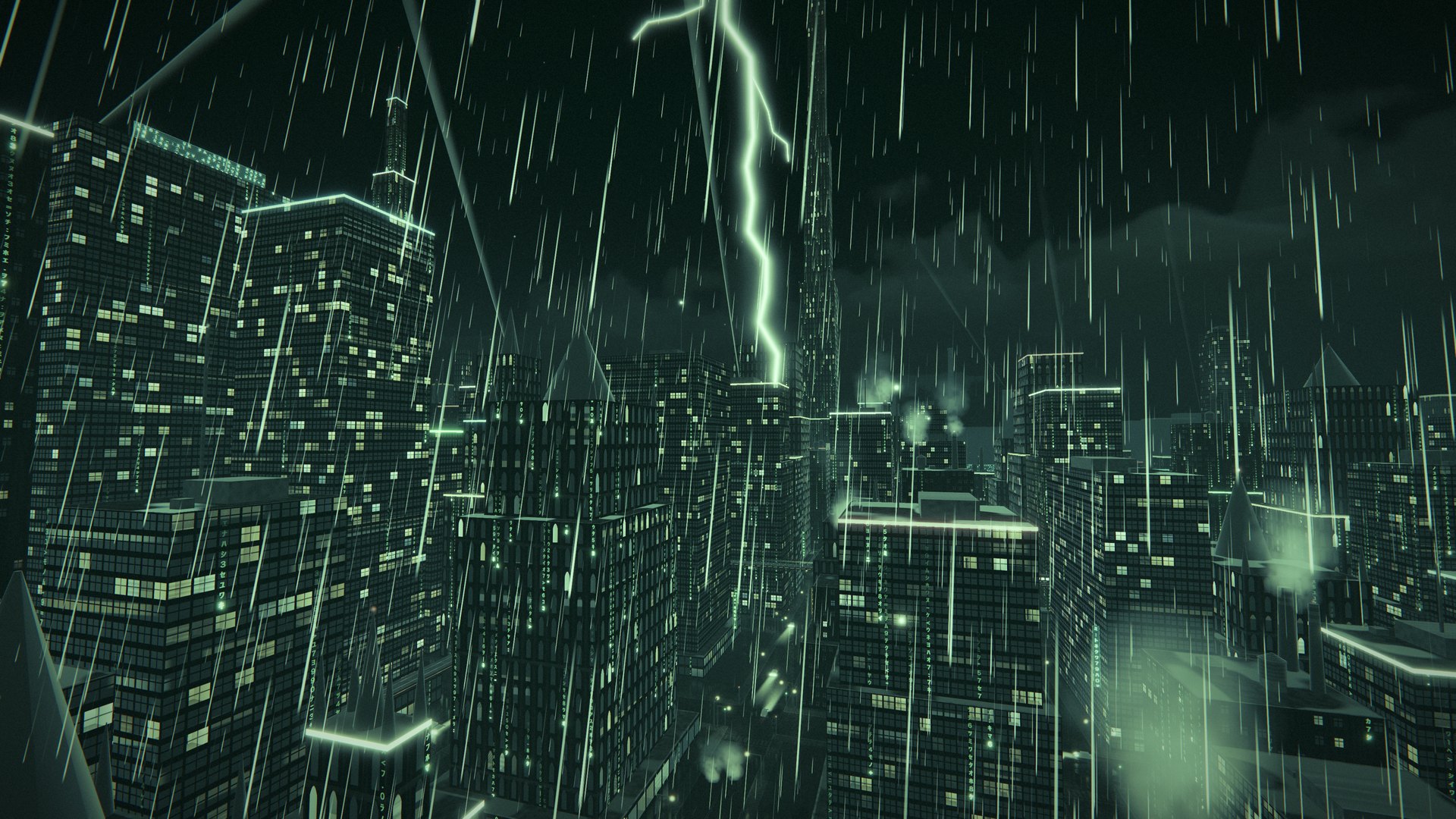
Matrix
A rainy night city you fly through in the browser, with generated streets, clouds, weather and traffic. Three scripted camera paths turn the same world into films; the city can also be regenerated.
- Repository
games · 3d · 2026-11-10
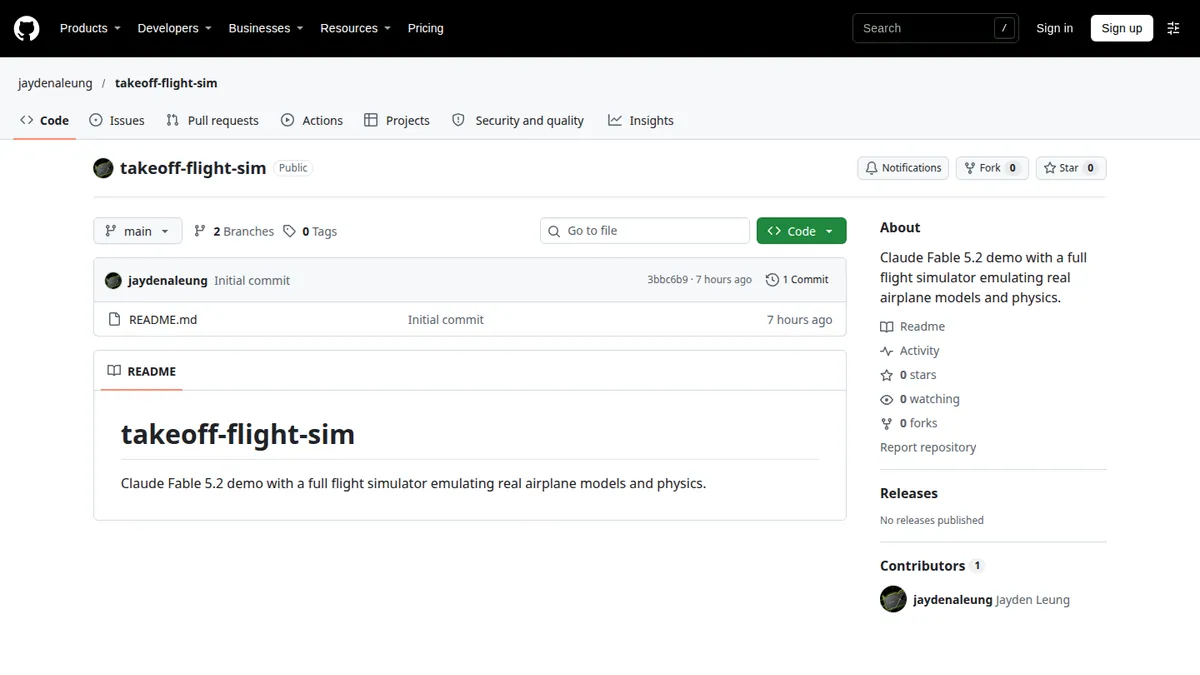
Takeoff Flight Sim
A browser flight simulator that models aircraft behaviour and physics rather than playing a canned animation. It is a launch-week experiment, and its repository is the best place to check what is implemented.
- Live
systems · tools · 2026-11-09
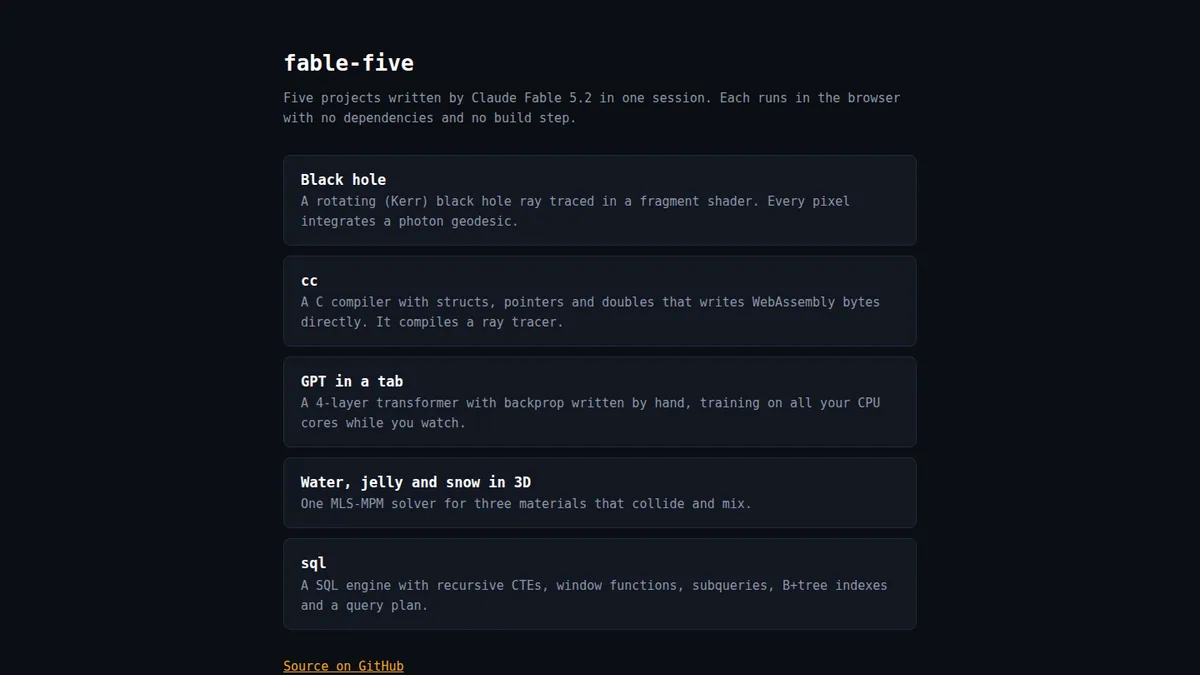
fable-five: five engines in one session
Five zero-dependency browser projects written in one Claude Code session: a Kerr black-hole renderer, a C-to-WebAssembly compiler, a tiny transformer trained in the tab, an MLS-MPM physics solver and a SQL engine. Each has its own test script and a listed set of limits.
- Live
science · tools · 2026-11-10
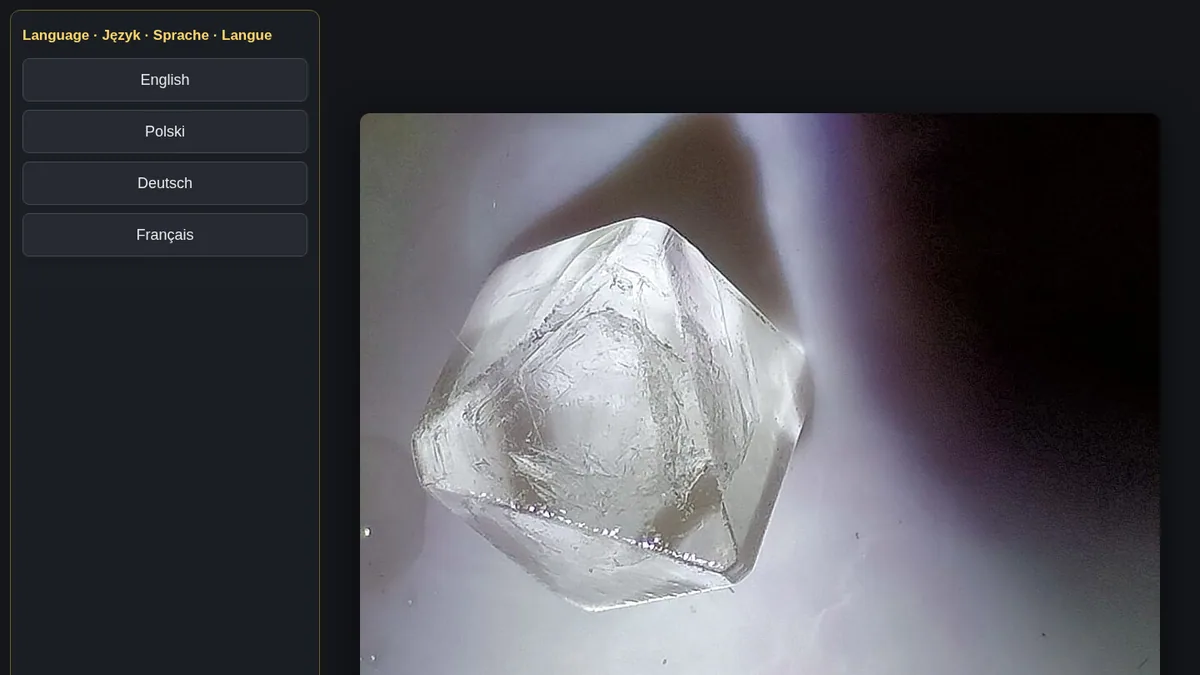
Alum Builder
A crystallography game built around the measured structure of potassium alum. Players place the repeating units, test whether the result is the real crystal and compare it with a model built from KAl(SO4)2·12H2O.
- Live
visual · 3d · 2026-11-10
Wired Sheet
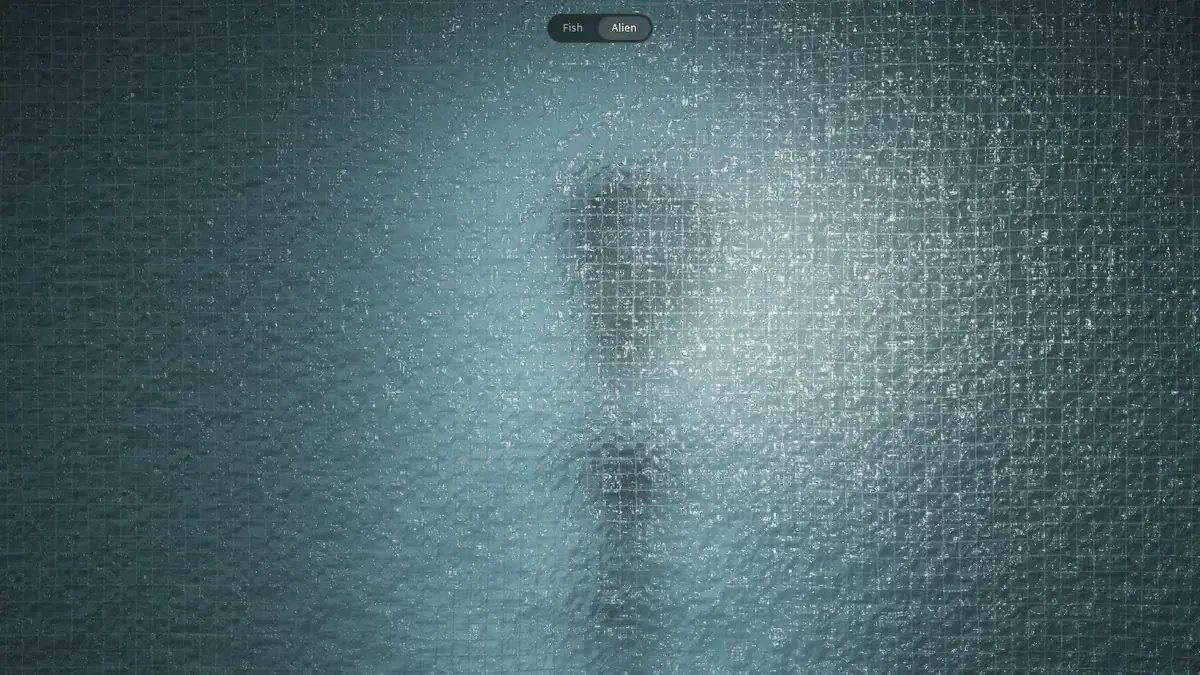
A three.js scene of something pressing against a sheet of wired glass, lit by a torch that follows the pointer. The page switches between two creatures and is a useful example of atmosphere built from shaders rather than assets.
- Live
games · 3d · visual · 2026-11-10
What the Water Keeps
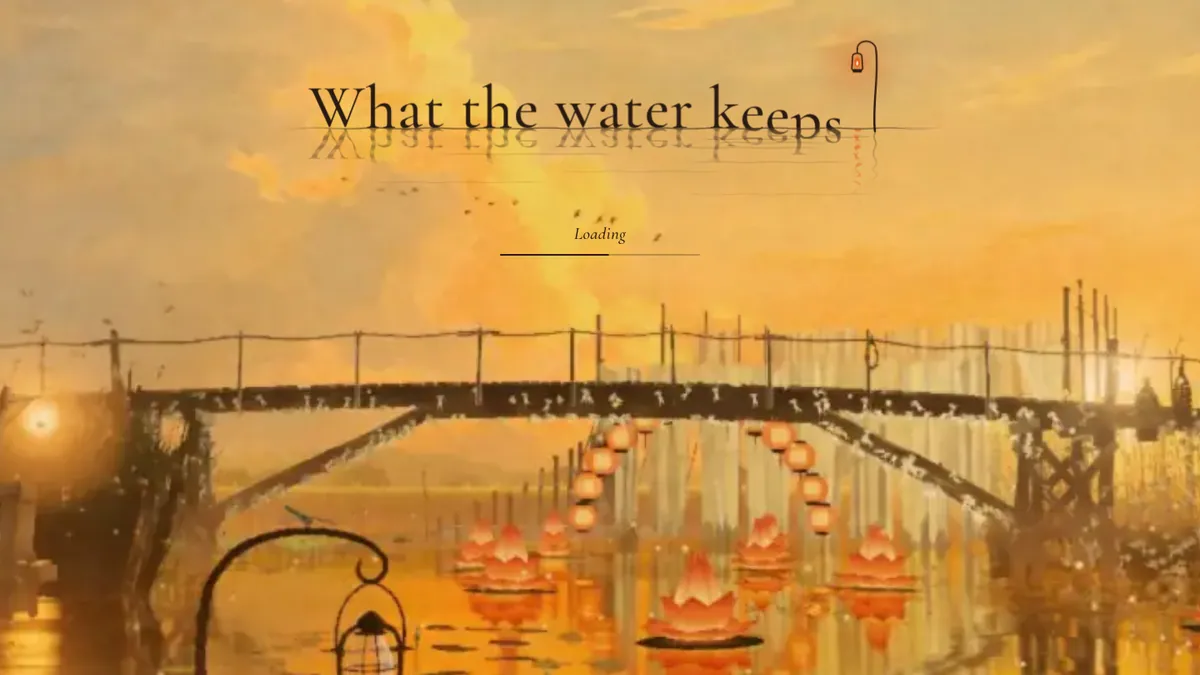
A slow boat ride through eight dreamlike worlds, built to be played in the browser rather than watched as a trailer. The screenshots are unusually painterly for a code-generated scene; the live page is the proof.
- Live
3d · visual · 2026-11-10
Mirror Earth
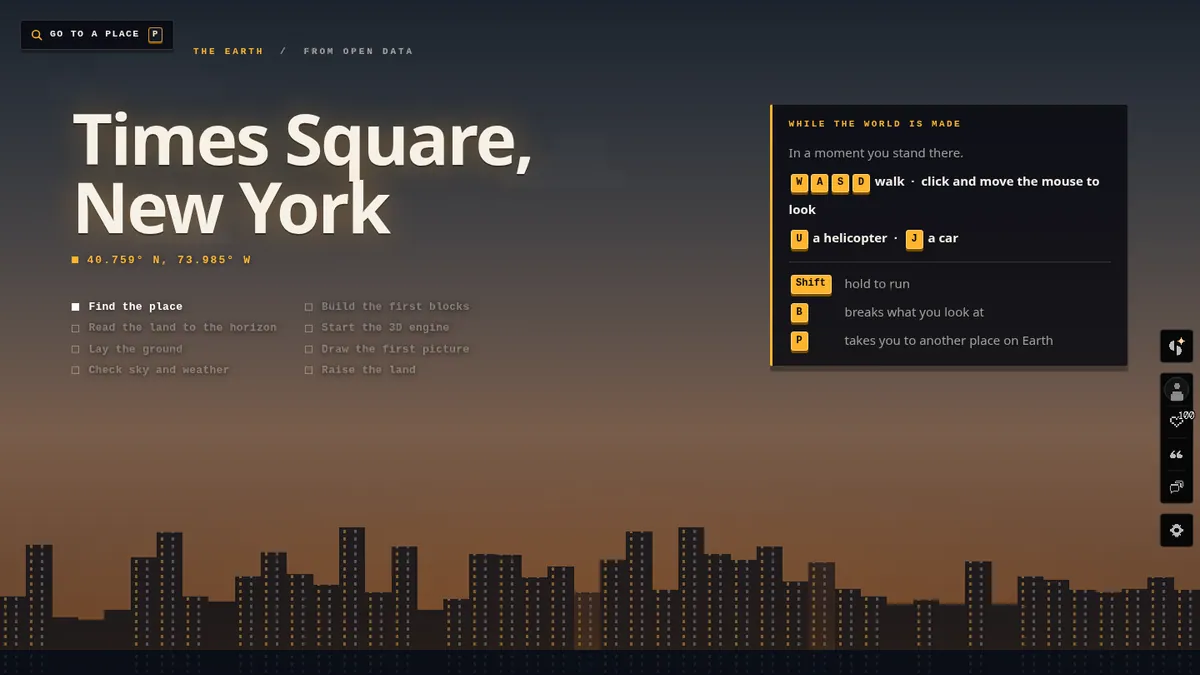
A playable Earth that starts from a real place and assembles the scene around it: streets, skyline, weather and a first-person walk. The useful question is not whether it is a game, but how much of the world is generated on demand.
- Live
games · visual · 2026-11-14
Small Magic
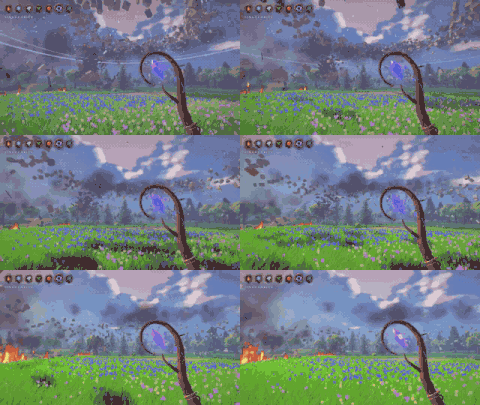
A wizard sandbox with seven spells and a town built from destructible pieces. The interesting part is the physics budget: objects move, collide and break instead of behaving like painted scenery.
Creator's figure Built in one day; about 1,800 destructible physics pieces — the creator's figures.
- Live
tools · science · 2026-11-15
RoverKit
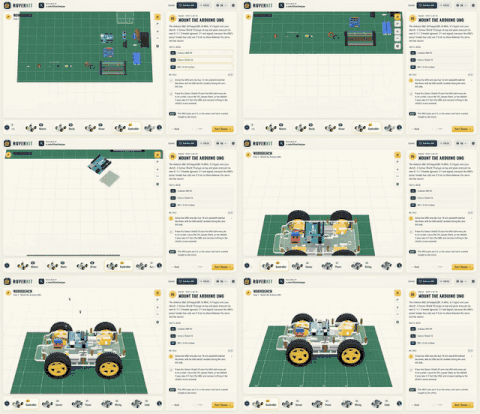
A step-by-step guide to building a robot car, with a simulator, a configurable arena and a visual code walkthrough. Arduino and ESP32 support make it closer to a classroom than a launch-week toy.
- Live
science · 3d · 2026-11-15
ER-6 Terrain Explorer
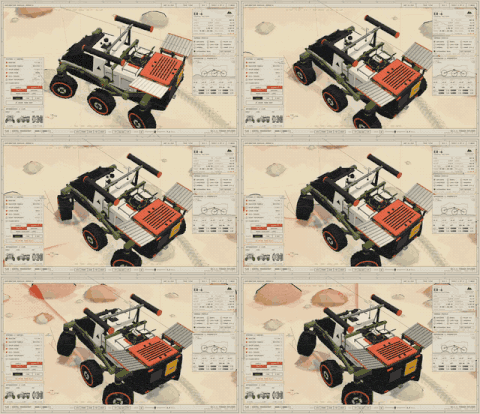
A simulated Mars rover built around a rocker-bogie suspension. You can watch the geometry do the work as each wheel finds its own ground over rough terrain.
Creator's figure The suspension design follows NASA's rover layout — the creator's description, not an engineering validation.
- Live
research · visual · 2026-11-15
Auden's lost 1941 poetry class
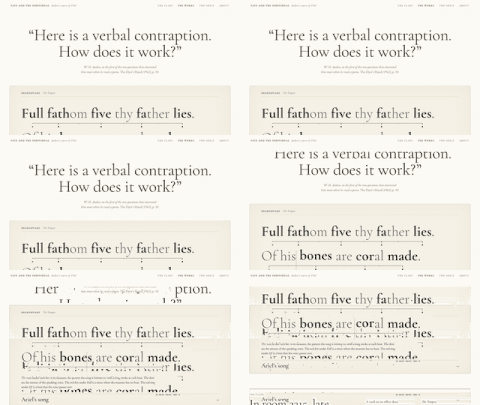
A reconstruction of W. H. Auden's English 135 class from an Internet Archive book and scattered notes. It shows a model doing editorial synthesis, not just generating another interface.
Creator's figure Built from an obscure Internet Archive book and scattered notes — the creator's description.
- Live
3d · research · 2026-11-13
Ancient Babylon, 600 BC
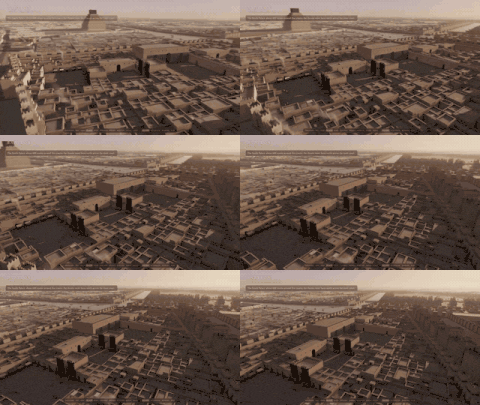
A walkable Babylon assembled from historical documents and plans. The visual is the hook; the useful claim is that the model can search for source material and turn a citation set into a scene.
Creator's figure Built over an eight-hour run after searching for historical material — the creator's account.
- Repository

3d · visual · 2026-11-13
Room at Dawn
A photoreal bedroom in three.js with no imported models or textures. Everything from the window light to the fabric is written as code, which makes the source more informative than the still.
- Live
visual · science · 2026-11-13
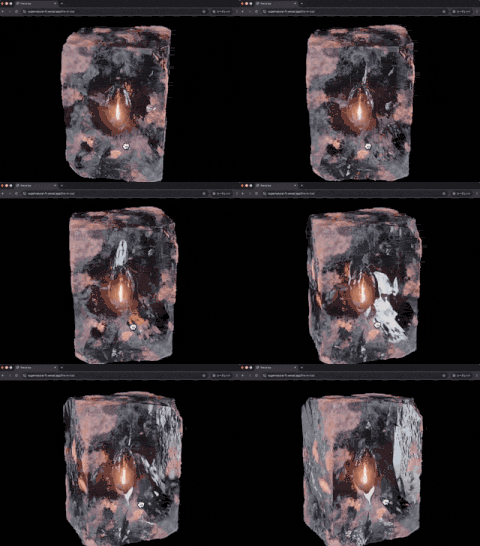
Fire in Ice
A raw WebGPU study of fire burning inside ice. It is a useful counterexample to the idea that every demo needs a game loop: here the deliverable is one material interaction that has to hold up at full screen.
- Live
audio · tools · 2026-11-13
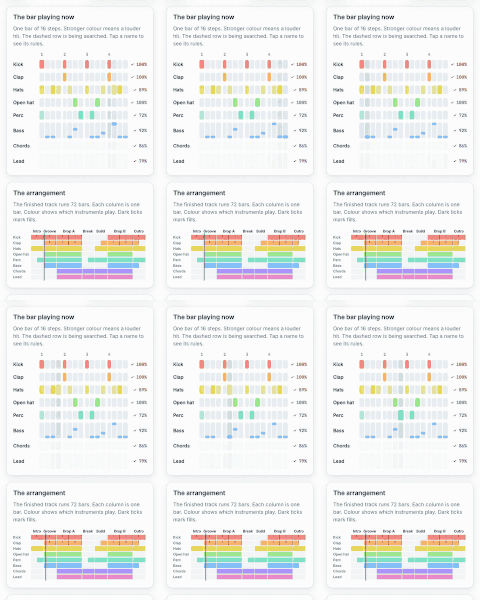
House Bangers
A house-music generator that tries patterns per instrument, scores them and arranges the result into a full track. Turn the sound on: the output is the product, not a visual wrapper around it.
Creator's figure Thousands of candidate patterns per instrument arranged into a 72-bar house track — the creator's description.
- Repository
audio · systems · 2026-11-13
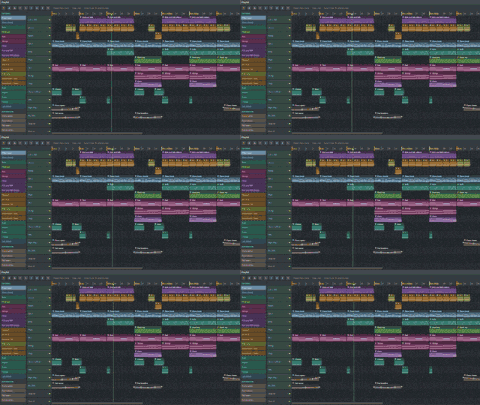
PULP
A native Windows digital audio workstation that an agent can drive. Ask for music and the model opens the DAW, creates tracks and works inside the same tool a person uses.
- Live

science · tools · 2026-11-13
One Heartbeat
A beating 3D heart with ECG and pressure traces, heart sounds and comparisons for normal rhythm, atrial fibrillation, heart block and aortic stenosis. It is an explainer you can inspect from several angles.
Creator's figure The project includes tests the model wrote for itself — the creator's claim; inspect the build before treating them as clinical evidence.
- Live

games · 3d · 2026-11-14
Siege Wing
A helicopter game set in a medieval siege: cannon, rockets and missiles against ballistae and a castle. The single premise gives the controls and the level design a reason to exist together.
- Live

games · 3d · 2026-11-14
Unsung Vale
A third-person open-world RPG demo with no imported art assets. Terrain, characters and effects are all generated in code, so the source shows where a convincing world still needs a designer's hand.
- Live

3d · visual · 2026-11-14
Code Planet
A small planet you can fly through from sea level into space, with meadows, cherry blossoms and weather. The constraint is part of the demo: the whole scene is code rather than a stack of imported assets.
Creator's figure Under 320KB of code — the creator's figure.
- Live
games · visual · 2026-11-15
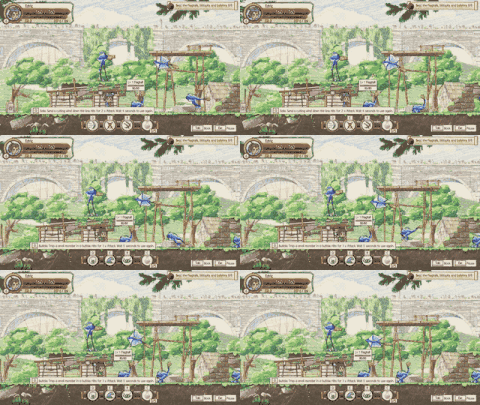
Valsera
A side-scrolling role-playing game in the browser with every visual drawn in code. It is a useful test of pacing as much as rendering: movement, combat and progression all have to fit one small playable slice.
- Live
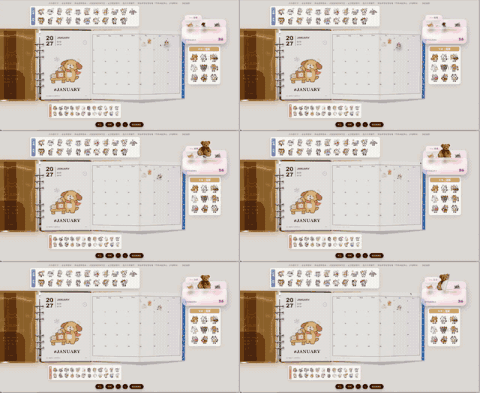
tools · 3d · 2026-11-12
Animals at Work
A paper planner rebuilt in 3D with page turns, writable dates and peelable stickers. It is also a hybrid workflow: Opus 5.5 established the skeleton and Fable 5.2 refined the materials against real footage.
What this wall does not prove
A good demo is a demonstration, not an evaluation. Several of these pages were made in one long session with no human edits; others were steered and debugged by their creators. The wall says what exists. It cannot tell you how often Fable produces something this good on your task, what the same prompt would do on Opus 5.5, or whether a project will still work next month. The repositories are linked for exactly that reason.
The strongest entries are the ones that show their tests: Earth's data audits, fable-five's test scripts, Formula to Pixel's 24 assertions and Sumi OS's preserved source. One Heartbeat and RoverKit extend that idea into medicine and hardware. That is the difference between a launch-week trick and a result another person can inspect.
Questions about the Fable 5.2 demos
What has been built with Claude Fable 5.2?
The launch week produced playable browser games, 3D scenes, scientific visualisations, audio experiments, research reconstructions, systems experiments and small tools. A community index tracked 165 live works by 2026-11-15. This page curates 45 and links each one to its creator's live work or repository.
Are these Claude Fable 5.2 demos independently verified?
The links and the work exist, but the performance and cost claims are not independently benchmarked here. Hours, token cost, Elo and similar numbers are labelled as the creator's figures. Open the source before quoting them as your own result.
Which Claude Fable 5.2 demo should I open first?
Start with Starry Nightrider for a visual idea turned into a playable world, Saltline for a complete browser shooter, House Bangers for an audio result, One Heartbeat for an inspectable medical explainer, Sumi OS for a systems project that publishes its source, or Formula to Pixel for numerical tests inside one HTML file. The right first click depends on whether you want entertainment, engineering evidence or a reusable pattern.
Were these demos made with one prompt?
Some projects were made in one long session with no human edits; others were steered, debugged or rebuilt by their creators. The card notes say which claim the creator made and where the support ends.
Understand the effort bill Turn a demo into a build recipe Compare with Opus 5.5 Read the full reference