GitHub · Media and content
jev-chat/jev-chat-jarvis
The clearest sign that this model class is about reading a situation.
What it does
An Android conversation copilot: while you chat in WeChat, QQ, X or Feishu it reads the screen, works out what the other person is asking, proposes replies and fills the input box — you decide whether to send. The README's own framing is non-invasive: read-only screen access, no hooks, no repackaging of the host apps.
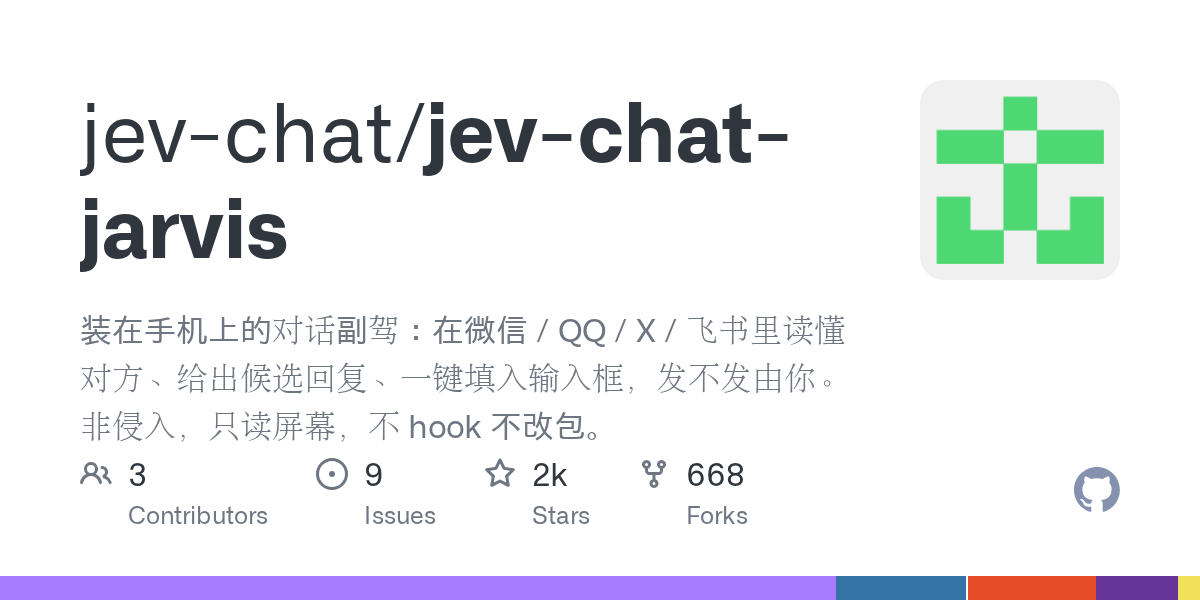
The repository's own description: “装在手机上的对话副驾:在微信 / QQ / X / 飞书里读懂对方、给出候选回复、一键填入输入框,发不发由你。非侵入,只读屏幕,不 hook 不改包。”
How it works
A Gradle Android app (`app/`) with an APK in the repository, a `site/` for the project page, and `tools/jev/` where the decision calls live; `CHANGELOG.md` shows the versions it has shipped.
The repository, by the numbers
Read from the GitHub API on 2026-09-27. Stars and the last push move daily — quote them with the date, the way we do.
What we checked
- the tree: apk, app, gradle wrapper, site, tools/jev, CHANGELOG
- MIT LICENSE (Finderchangchang and contributors)
- README describes reading the screen and offering candidate replies with one-tap fill
- the app is distributed as an APK from the repository itself
What we did not check. We did not install it (no Android device here) and did not read the Android source to verify the no-hooks claim.