GitHub · Triage and routing
YaoApp/yao
Seeing how a mature self-hosted product absorbs this model.
What it does
Runs agents and their workspaces in one self-hosted board, reachable from desktop, mobile, browser or API. Jev is offered as the model that returns typed decisions with confidence, alongside the harnesses the product already supported.
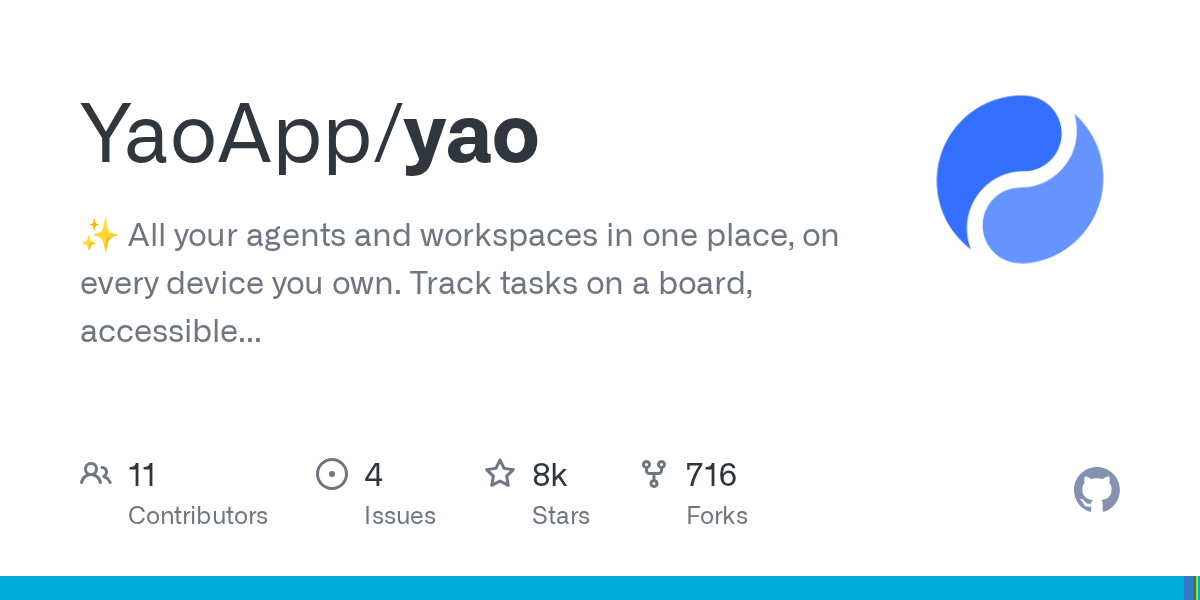
The repository's own description: “✨ All your agents and workspaces in one place, on every device you own. Track tasks on a board, accessible from desktop, mobile, browser, or API. Self-hosted.”
How it works
Decisions the user or the agent needs to make inside a task are sent to Jev as bounded questions, and the answer comes back as a value the workspace can act on, rather than as text shown to a person.
The repository, by the numbers
Read from the GitHub API on 2026-09-24. Stars and the last push move daily — quote them with the date, the way we do.
What we checked
- the README and the Jev section it links, read 2026-09-25
- the repository's licence file
- the star count and last push, read from the GitHub search API the same day
What we did not check. How much of the product actually routes through Jev rather than through the other harnesses it lists, and whether the integration is load-bearing or an option in a settings screen.